On the Day of Your KINNECT Medical Appointment
What to bring, what to wear and what to expect when you walk through the door, so you can turn up relaxed and ready.
Know what to expect
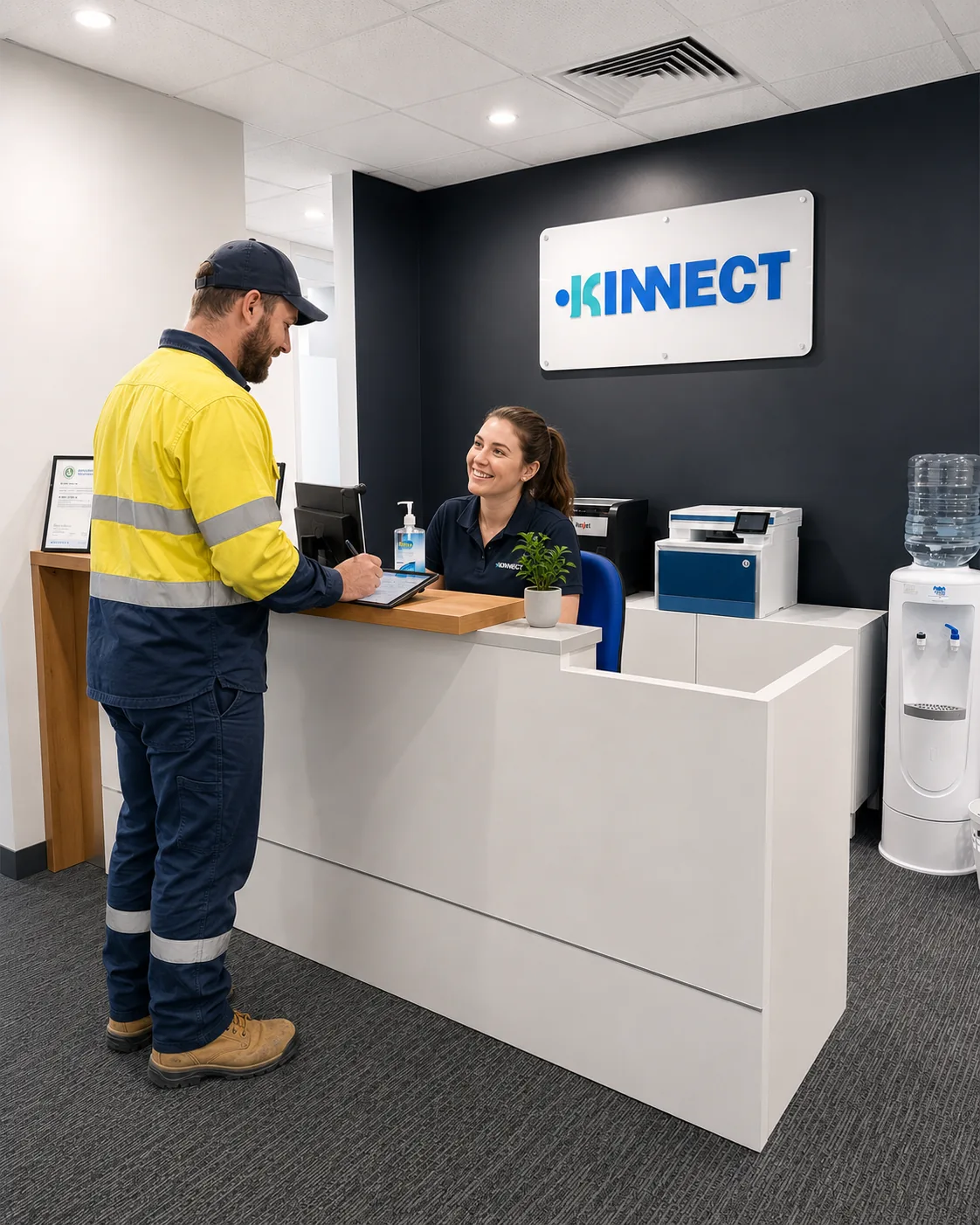
A KINNECT medical is not a pass-or-fail test, and KINNECT does not decide whether you get the job. Our team will guide you through the assessment, answer your questions and give your employer the information they need to help keep you safe at work. Follow the steps below to prepare, arrive ready and understand what happens next.
Appointment guide
Before you leave
Use this quick checklist, then jump to the section you need.
Appointment guide
Prepare for your appointment
Follow your booking instructions and complete your paperwork. Tell us about support needs, illness or recent injury before attending. Need to change your booking? Cancel or reschedule.
What should I do before my appointment?
Complete your medical history questionnaire and any other paperwork using the link sent to you by email or SMS.
If you cannot complete it beforehand, you can use an iPad when you arrive at the clinic.
Can I eat and drink normally?
Most pre-employment assessments do not require fasting. If your booking confirmation specifically asks you to fast, follow those instructions. Otherwise, eat normally and stay well hydrated, especially if your assessment includes a urine sample or fitness test.
Avoid caffeine for the few hours before your appointment. Coffee, tea and energy drinks can raise your heart rate and blood pressure, which may affect your results.
Should I take my regular medication?
Yes. Take your usual medication as prescribed unless your doctor has told you otherwise.
Bring the medication details listed in the What do I need to bring? section so we can record them accurately.
Can I bring my children?
Unfortunately, no. The clinic environment is not safe for children, and we cannot supervise them while you are being assessed.
Please arrange care before your appointment. If a child arrives with you, your appointment cannot go ahead.
Can I bring a support person?
You are welcome to bring a support person to the clinic. They can sit with you in the waiting area and, depending on the test and the room, may be able to be with you during parts of the assessment. Let reception know when you arrive.
I have a disability or need accessibility support. What should I do?
Please let our bookings team know as soon as possible so we can make sure the clinic location, room and tests are set up to suit your needs. Call 1300 546 632 or send a general enquiry.
What if I'm unwell or have COVID-19 symptoms?
If you are feeling unwell, have flu-like symptoms or have tested positive for COVID-19, call 1300 546 632 to reschedule before attending.
Follow the screening instructions supplied for your booked clinic. Affiliate clinics may have their own requirements.
I have a recent injury, illness or surgery. Can I still attend?
If you have had recent surgery, an injury or are recovering from illness, call 1300 546 632 before your appointment. Our team can review your situation and let you know whether to proceed or wait until you have recovered.
Bring any medical clearance relating to surgery you have had in the last six months. If clearance is requested during your assessment, the letter you receive will explain what to do next.
What if I need to cancel or reschedule?
Call 1300 546 632 or request a cancellation or reschedule as early as possible. Submitting a reschedule request does not confirm a new booking.
Read the cancellation and reschedule policy for the applicable terms.
How do I get help before my appointment?
Call 1300 546 632 or send a general enquiry. To change an appointment, use the separate cancellation or reschedule request.
Appointment guide
What to bring and wear
Have your photo ID, medication details and glasses ready, and wear comfortable clothing with closed-in shoes. The checklist above links to each full answer.
What do I need to bring?
Bring these five essentials:
- Photo ID.
- A copy of any prescriptions you currently take.
- Details of any prescription or over-the-counter medication you have taken in the last 14 days, including its name, dose and when you last took it.
- Your glasses, if you wear them. If you cannot remove your contact lenses, bring saline and a contact lens case.
- Any medical clearance relating to surgery you have had in the last six months.
What ID is accepted?
Bring one of these forms of government-issued photo ID:
- Driver's Licence, including a Digital Driver's Licence (preferred).
- Proof of Age card.
- Government-issued Student ID.
- Valid Australian Passport.
You must bring your Driver's Licence if you are booked for a Rail Medical or Commercial/Dangerous Goods Drivers Medical, or if your role involves driving.
What should I wear?
Wear:
- Closed-in shoes, such as trainers or joggers. Do not wear thongs or sandals.
- Loose, comfortable clothing that you can move easily in.
- Suitable underwear, as you may be asked to remove outer clothing for parts of the examination.
What should I do about glasses or contact lenses?
Please wear your glasses to the appointment. If you wear contact lenses, remove them before you arrive and wear glasses instead if possible. Otherwise bring saline and your contact lens case so you can remove them at the clinic.
I wear hearing aids. What do I need to know?
Bring an audiologist report from within the last 12 months. Your hearing test will be performed without your hearing aids, and we will give you a clean, safe place to store them during testing.
If you cannot remove your hearing aids, tell us before your appointment so we can arrange specialist audiology testing. A standard hearing test cannot be completed while you are wearing hearing aids.
Appointment guide
Arrive at the clinic
Check your confirmation for the booked clinic. Find KINNECT clinic directions and parking, or call 1300 546 632 for help finding an affiliate clinic.
How do I find the clinic and where can I park?
For KINNECT clinics, visit Our Locations for the address, directions and parking information for your clinic.
If you are booked at a KINNECT Affiliate Clinic and need help finding it, call 1300 546 632.
Will I be asked to pay?
No. Any appointment KINNECT books for you, including radiology and pathology, is paid for using the biller code on your referral.
If anyone asks you to pay, do not hand over money. Call us straight away on 1300 546 632.
What COVID-19 screening rules apply?
Follow the screening instructions supplied for your booked clinic. If you are attending a KINNECT Affiliate Clinic, follow that clinic's screening rules.
If you are unwell, call us before attending. See illness guidance.
Appointment guide
During your assessment
Your tests depend on your booking — you will not necessarily have all of these. The clinician will explain what is involved.
- Hearing: listen through headphones and respond to sounds.
- Vision: checks of distance, depth and colour perception.
- Lung function: breathe into a mouthpiece to measure airflow.
- Drug and alcohol screening: a urine sample and breath test if booked.
- Functional assessment: tasks such as lifting and grip strength matched to the role.
- Medical examination: health history and physical checks such as blood pressure and heart rate.
Some bookings also include blood tests or a chest X-ray.
How long will it take?
Your assessment may take from 15 minutes to about two hours, depending on the tests required.
If you have appointments at multiple clinics, allow most of the day. For a more specific estimate, call our customer service team on 1300 546 632.
What sort of tests will I have?
The tests depend on your assessment. Common tests include:
- Audiometry (hearing).
- Vision testing.
- Urinalysis.
- General medical examination.
- Medical history review.
- Instant urine drug and breath alcohol screening.
- Spirometry (lung function).
- Blood pressure and heart rate.
- Blood test.
- Chest X-ray.
What if there's a functional or fitness component?
Some assessments include functional tasks that reflect the demands of the role, such as lifting, carrying, grip strength or treadmill work.
An exercise physiologist or physiotherapist will explain each task before you start. You can stop or take a break at any time.
What should I know about consent and privacy?
Before testing begins, we will explain what is involved and ask for your consent. You can ask questions or stop at any time.
Read our guide to consent and privacy at KINNECT for more information.
Appointment guide
After your assessment
Follow any clearance instructions you receive. For explanations of reporting, risk ratings and hiring decisions, read the candidate results FAQs.
Why won't the clinician tell me my results on the day?
A KINNECT doctor reviews the assessment before results are issued. Read the candidate explanation of results on the day and risk ratings.
Who gets my results?
Read the candidate results guidance, including the separate rules for legislative medicals. Our consent and privacy guide explains information sharing and access.
What does "medical clearance" mean?
Sometimes we cannot safely complete a test because of something identified during your assessment, such as raised blood pressure, recent surgery or an injury.
We may ask you to get clearance from your GP before the test is rescheduled. The letter you receive on the day will explain what to do next.
How do I give feedback on my experience?
After your assessment, we will text you a short feedback form. Your feedback helps us improve.
If you would prefer to speak with someone, call 1300 546 632.
Still have questions?
Send our team an online enquiry about anything you're unsure of before your appointment. Prefer the phone? Call 1300 546 632.