Bridging the Gap: How KINNECT is Setting a New Standard for Workplace Rehabilitation Training
Janna Riordan, an Accredited Exercise Physiologist and KINNECT veteran of 17 years, is now in her second year leading KINNECT’s Workplace Rehabilitation Success (WRSP) Program.
Combining her passion for teaching and mentoring fellow KINNECTers with deep expertise in workplace rehabilitation, Janna leads a program designed to equip new starters—both graduates and experienced practitioners new to the industry—with the support and knowledge they need to thrive. Here, she shares insights into the WRS Program and its positive impact on participants.
The evolution of a graduate program
KINNECT has delivered a graduate program for several years, originally centred on a monthly Learning & Development (L&D) session. In early 2024, however, it evolved into a more structured initiative, recognising the need to support not only graduates but also experienced allied health professionals transitioning into workplace rehabilitation.
“I took on coordinating the program, and we changed the name to the Workplace Rehabilitation Success Program to better reflect our expanded audience,” Janna explains.
“We also introduced more structure and refined the calendar, adjusting the content and schedule to better meet participants’ needs.”
This evolution has helped position KINNECT as a strong choice for attracting new graduates. “We looked at what other organisations were doing and set out to create a stand-out introduction program—one that is competitive and addresses the knowledge gaps we see across the industry,” she says.
A comprehensive introduction to workplace rehabilitation
The program’s dual focus on learning and support is delivered through a multifaceted approach: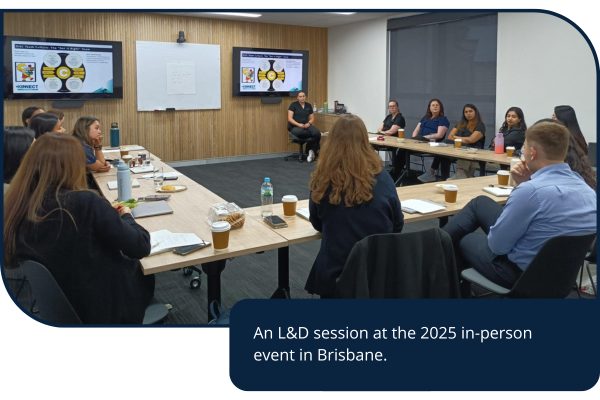
- Monthly Learning and Development (L&D) sessions: Virtual sessions covering key workplace rehabilitation topics, often supported by guest speakers. Topics focus on core skills relevant across disciplines, including report writing, recovery-at-work planning, pain education, case noting, medical case conferencing, and structuring initial assessments. Sessions are designed to reinforce on-the-job learning and provide practical takeaways.
- Group discussions: Bi-monthly virtual sessions that create space for collaboration, shared problem-solving, and peer learning in a supportive environment.
- Discipline-specific mentoring: Participants are paired with mentors in their area of expertise, with check-ins tailored to individual needs.
- Additional support channels: Participants can access a Teams chat and attend one-on-one check-ins with Janna to support their development. Regular virtual and in-person touchpoints foster strong connections across the consultant network.
- In-person celebration event: All participants come together from across the country for a day to consolidate their learning with interactive L&D sessions and build connections through fun group engagement activities.
The program is open across disciplines and states, with participation currently spanning Queensland, New South Wales, and Victoria, and plans to expand into Western Australia and South Australia as those regions grow.
Content and delivery are reviewed annually, incorporating feedback from participants, Team Managers, and Janna’s ongoing assessment of the skills required for workplace rehabilitation consultants.
Bridging the gap
Through its thoughtfully designed curriculum, the program plays a critical role in bridging the gap for graduates and new consultants who may have had limited exposure to workplace rehabilitation at university.
“The focus at university is typically on clinical roles. While some courses touch on workplace rehabilitation, many graduates leave unprepared for the complexity of the role, which requires a much broader skillset,” Janna explains.
Lasting lessons, confidence and connection
Participant feedback has been overwhelmingly positive, reinforcing the program’s value in building confident and capable consultants.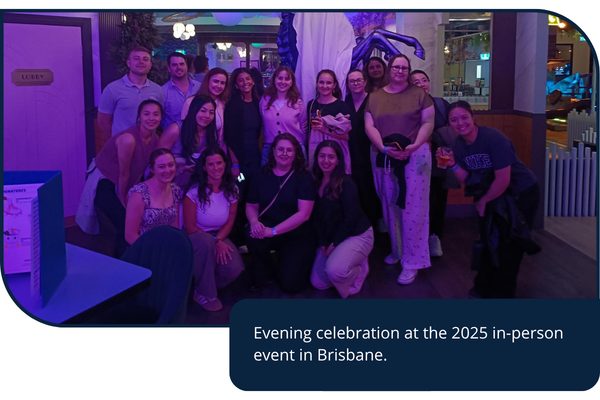
“It doesn’t matter what discipline you’re in—this program is about becoming a strong workplace rehabilitation consultant and using your skills to their full potential,” Janna says.
Beyond skill development, participants build lasting relationships with peers across disciplines and locations—connections they can draw on throughout their careers.
“The program creates a real sense of community for new starters. It’s important to know others are facing similar challenges.”
The impact is particularly evident when consultants navigate their first complex cases. WRS Program graduate Rebecca Heterick reflects on her experience:
“I had a tricky first case, but I was supported the whole way through. It took time, but the outcome was incredibly rewarding—the worker was almost in tears when she returned to work. She thought she’d never get back.”
Each participant takes away something different, but all report the program as highly valuable. In the People Stories below, three graduates share their perspectives:
• Rebecca Heterick – Accredited Exercise Physiologist
• Millicent Valencia – Rehabilitation Counsellor
• Nectaria Markellos – Registered Psychologist
If you’re considering a move from clinical treatment into workplace rehabilitation, or preparing to graduate from an allied health degree, learn more about the Workplace Rehabilitation Success Program and career opportunities at KINNECT.